The Most Important Number Most Commercial Teams Cannot Quote
Most commercial teams can tell you their pipeline value inside ten seconds.
They can quote their win rate for the last quarter.
They know their hit rate on shortlists.
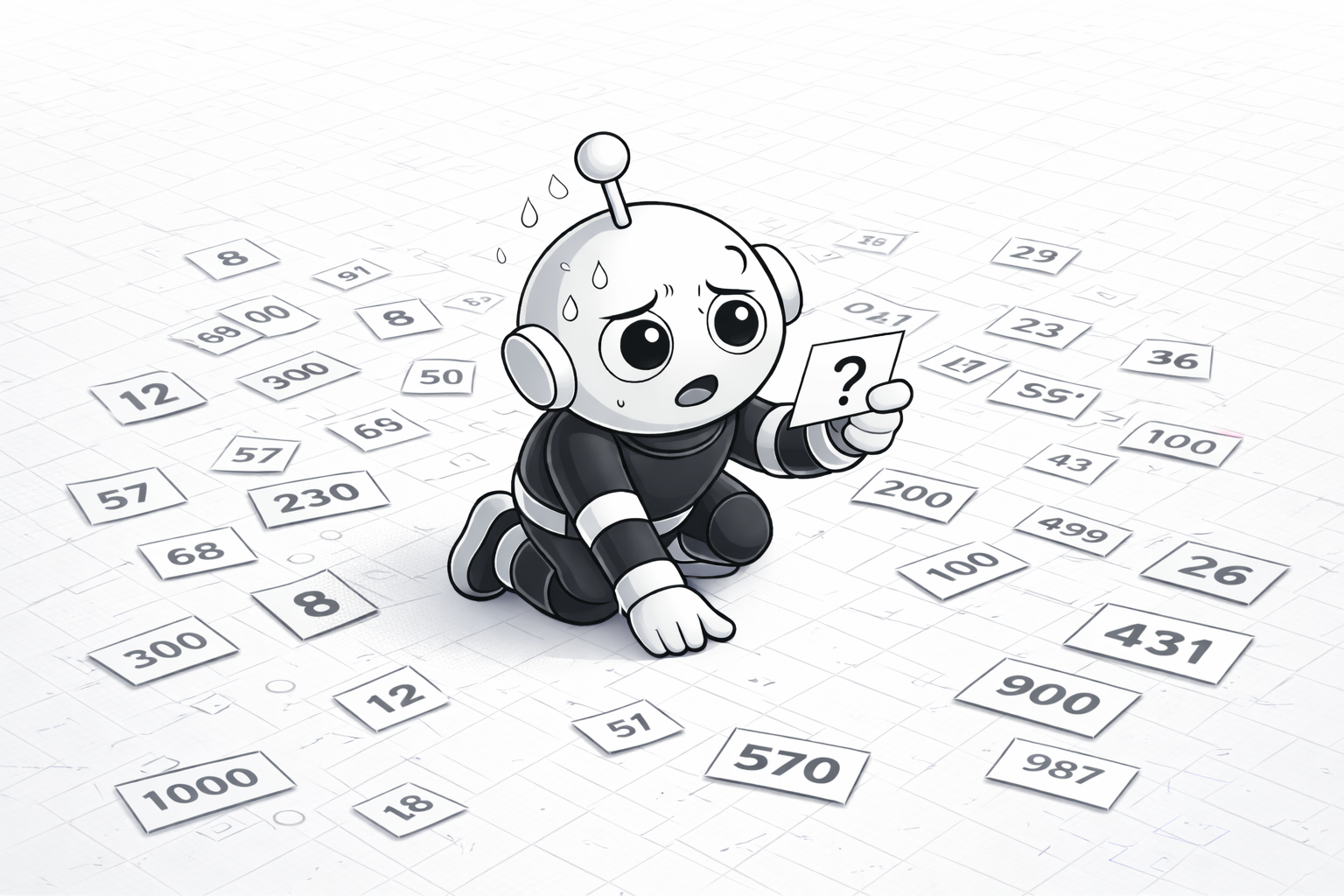
Ask them what the last tender response cost to produce and the answer changes.
The room goes quiet.
Someone reaches for a round number. The finance person looks at the bid manager. Eventually an estimate lands, caveated twice, and the conversation moves on.
Laurie Nicol, Tendl founder, wrote about this directly. After asking the question of CEOs across the Australian and New Zealand mid-market, his observation was blunt:
“These are people who can tell you their cost per hire, their cost per acquisition, their overhead recovery rate, and their gross margin by project type. They run $50M, $80M, $150M businesses where 30% to 60% of new revenue arrives through competitive tenders. The bid function is one of the most consequential cost centres in their organisation. And they have never calculated what it actually costs them to produce a single submission.”
Cost per bid captures the full internal effort required to produce a qualified, submitted response:
- bid management;
- subject matter input;
- pricing;
- review;
- approval; and
- delivery.
A reasonable figure for a mid-complexity bid could be $8,000 to $20,000 in internal effort, with complex infrastructure, defence, or major services bids exceeding $50,000. At 50 bids a year and a typical mid-market win rate of 25 percent, more than $400,000 of labour and senior staff time goes into work the company did not win.
That cost is invisible because of how it sits in the books. Effort is spread across salaries, project allocations, and overhead. No single line item carries the total. No single owner reports it.
What breaks when bid cost is invisible
Forecasts lose defensibility. A full pipeline reads well until someone senior asks how much of the team’s capacity is tied up producing the responses behind it. Without a figure, the commercial leader is forecasting revenue on top of unpriced input. When the forecast misses, the post-mortem has nowhere to land.
Qualification conversations stay political. The most common qualification failure happens when someone senior wants to pursue a bid and the commercial leader has no hard counter. “It will stretch the team” is a feeling. It carries no weight against a bid that already has senior backing. What the leader actually needs, and usually does not have, is a number to put on the other side of the scale.
Win rate stops telling a useful story. Win rate in isolation is a headline metric. It describes conversion without describing what the conversion costs to produce. Two teams with identical win rates can sit on very different commercial positions, and the commercial leader cannot tell which one they are running.
Bid cost as a forecasting variable
Once the number exists, the downstream changes are practical.
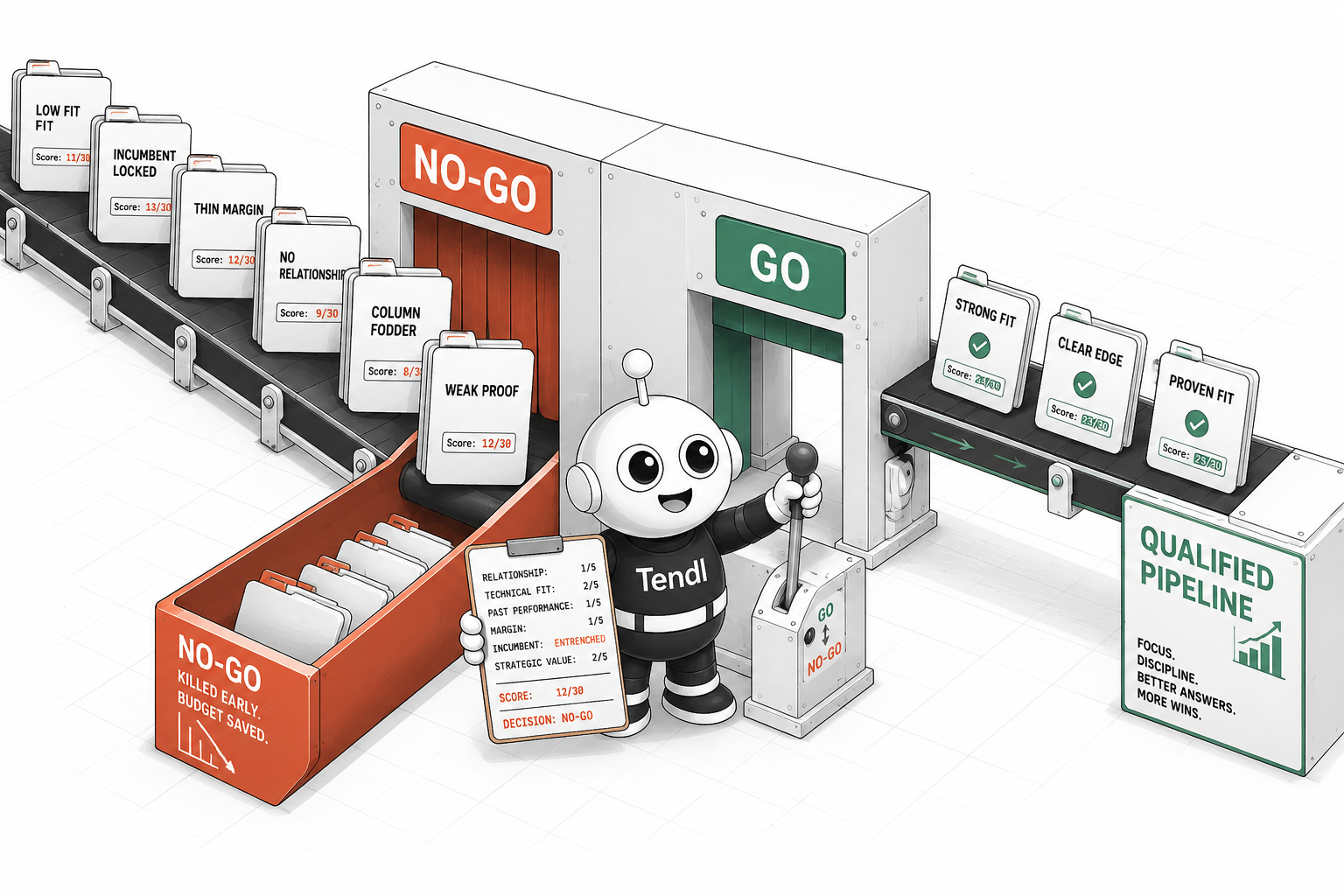
Qualification gets easier. A bid manager no longer has to argue against a pursuit of feeling alone. They can put a figure on the table and let the economics do the work. Go/no-go becomes a conversation about probability and spend.
Forecasts start carrying more weight. A pipeline report showing revenue on one side and cost of pursuit on the other is a report finance can actually use. Patterns start to show over time: which bids are worth chasing, which buyer types pay off, which sectors quietly drain the team.
Resource planning becomes forward-looking. With a clear cost per bid and a view of the pipeline, the team can model headcount and SME time against the quarter ahead before tenders start landing.
When a major bid loses, the review includes the cost of the effort alongside the outcome. Over time, the organisation builds a real record of what its bid function costs, and what it returns.
None of this is exotic thinking. It is what every other revenue channel in the business already gets. The tender function just hasn’t caught up yet.
Tendering is sales. The measurement discipline is overdue.
Run the numbers on your own bid function
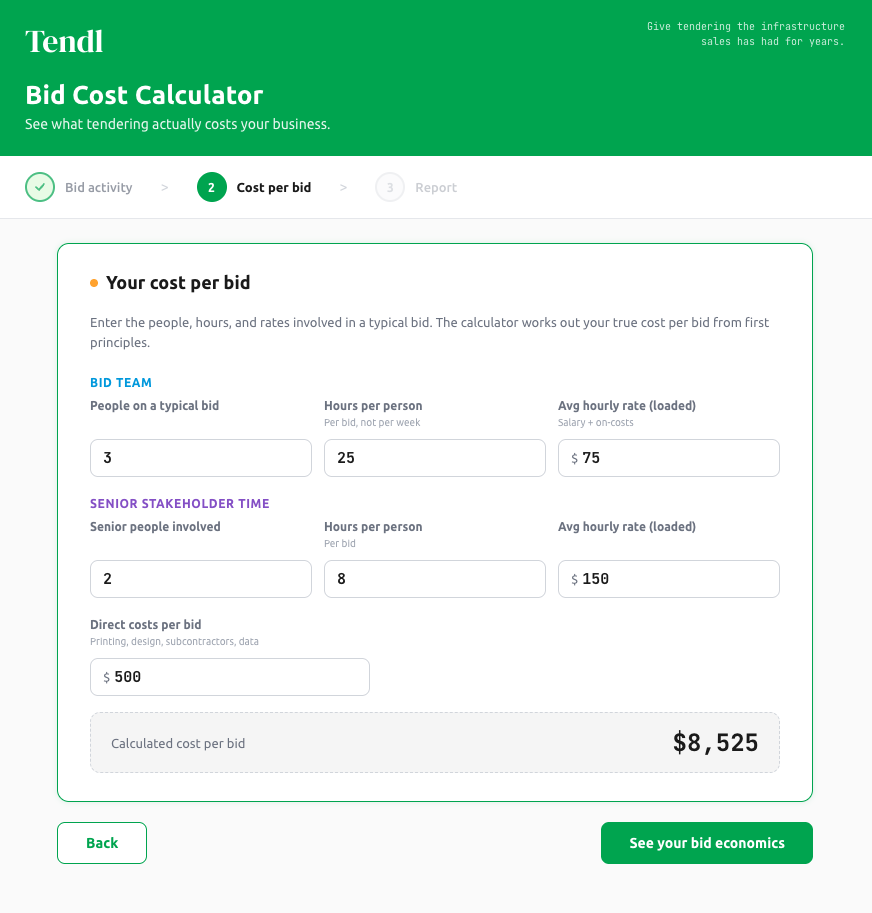
Tendl built a free Bid Cost Calculator that walks through the inputs and produces a clear picture in about five minutes. No sign-up, no sales call.
Use the Bid Cost Calculator here: https://tendl.ai/tools/bid-cost-calculator.html