
Who writes the bids when there is no bid team?
In a technical firm with no dedicated bid function, the people writing the tenders are the people you can least afford to have writing tenders. The principal engineer. The project lead. The technical director. The same scarce, expensive people the live job needs most are the ones pulled into the submission, usually from memory, usually at night.
It works, in the narrow sense that bids go out the door. It does not scale, because every bid is paid for in the firm’s most constrained resource and none of the effort accumulates.
With no bid team, it becomes up to your best technical people, or a side admin task
When there is no bid team, the bids are written by whoever holds the technical knowledge, which means the senior operators and specialists. There is no one else who can speak credibly to delivery risk, describe the method, or stand behind the claim.
So the firm’s most valuable billable people spend evenings and weekends assembling responses, and the work that should be funding the business competes directly with the work of winning more of it.
The alternative is worse - it’s treated like an admin task where your most important revenue function doesn’t get the attention it needs to win.
This is not a marginal inconvenience. Research from QorusDocs, drawn from its 10th annual proposal survey of nearly 300 organisations, found that delays from subject-matter experts are the single biggest bottleneck in proposal work, cited by 48 percent of teams across all industries. In architecture, engineering, and construction, the figure rises to 64 percent, the highest of any sector. The constraint is not effort or intent. It is access to the small number of people who know the answer.
The firms feeling this most acutely are exactly the technical, specialist contractors where the knowledge is concentrated in a few heads and there is no bid function to absorb the load.
Why does bidding on senior memory fail to scale?
Bidding on senior memory fails to scale because memory is the one resource that does not transfer and does not compound. When the answer to a technical question lives in the project director’s head, it is available only when the project director is available, and it disappears the moment they move on. The next tender that needs the same answer rebuilds it from scratch, at full cost, in full senior time, again.
QorusDocs framed the wider shift plainly: execution, not content creation, has become the main bottleneck. The hard part is no longer producing words. It is locating the right knowledge, coordinating the people who hold it, and getting a complete response together before the deadline. For a firm running on individual memory, that coordination tax is paid on every single bid, and it is paid in the hours of the people the business can least spare.
The result is a ceiling. The firm can only bid as often as its senior people have evenings to give, and those evenings are the first thing the busy season takes away.
What changes when the firm has a system
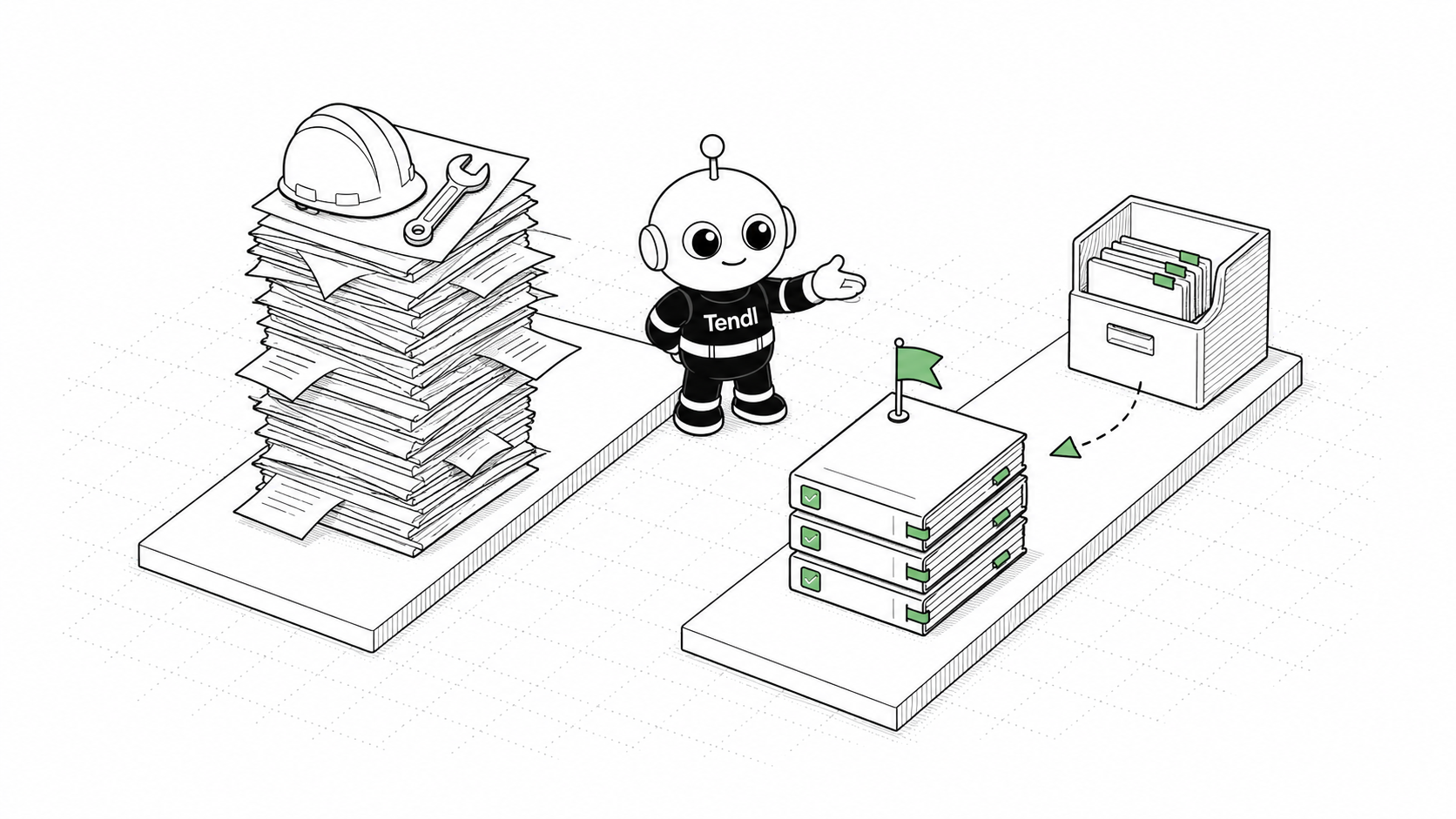
When the firm has a system, the cost of each bid stops being measured in senior hours and starts falling with every response. A Response Management System holds the firm’s qualified positions, its proven answers, and its governed evidence in one place. The knowledge that used to live in the project director’s head lives in the system instead, where the next bid can draw on it without booking the project director’s evening.
This is where Tendl operates, as infrastructure underneath the pursuit rather than a faster way to type. AI handles the requirements analysis, the first draft, and the internal coordination that used to eat the most time. Institutional memory means a response is assembled from approved material the firm already owns. The senior people are still in the loop where judgement matters, on qualification and on the technical claim they alone can stand behind, but they are no longer rebuilding the same answers under pressure for the tenth time.
The effect is that the firm’s most expensive people get their evenings back, and the bidding keeps running even when they are buried in delivery.
How firms grow without adding bid headcount
Firms grow without adding headcount by lowering what each bid costs to produce, not by hiring more people to absorb an unmanaged process. Adding a bid coordinator to a system that still runs on senior memory simply adds another person to the coordination problem. Lowering the senior-time cost of each response lets the existing team bid more often, qualify with the same discipline, and win more of the work it is already good at.
The work won through tenders funds most of what else the business does. It should not depend on whether the principal engineer had a free Sunday. Give that channel the system it deserves, and the firm wins more of the work it should be winning, without the growth being paid for by its scarcest people.