Go/No-Go Scoring
Go/No-Go decisions are where most response teams quietly haemorrhage money. The default is to bid. Bidding feels like activity. Walking away feels like failure. The result is a backlog of borderline tenders that consume capacity, dilute the strong bids, and rarely convert.
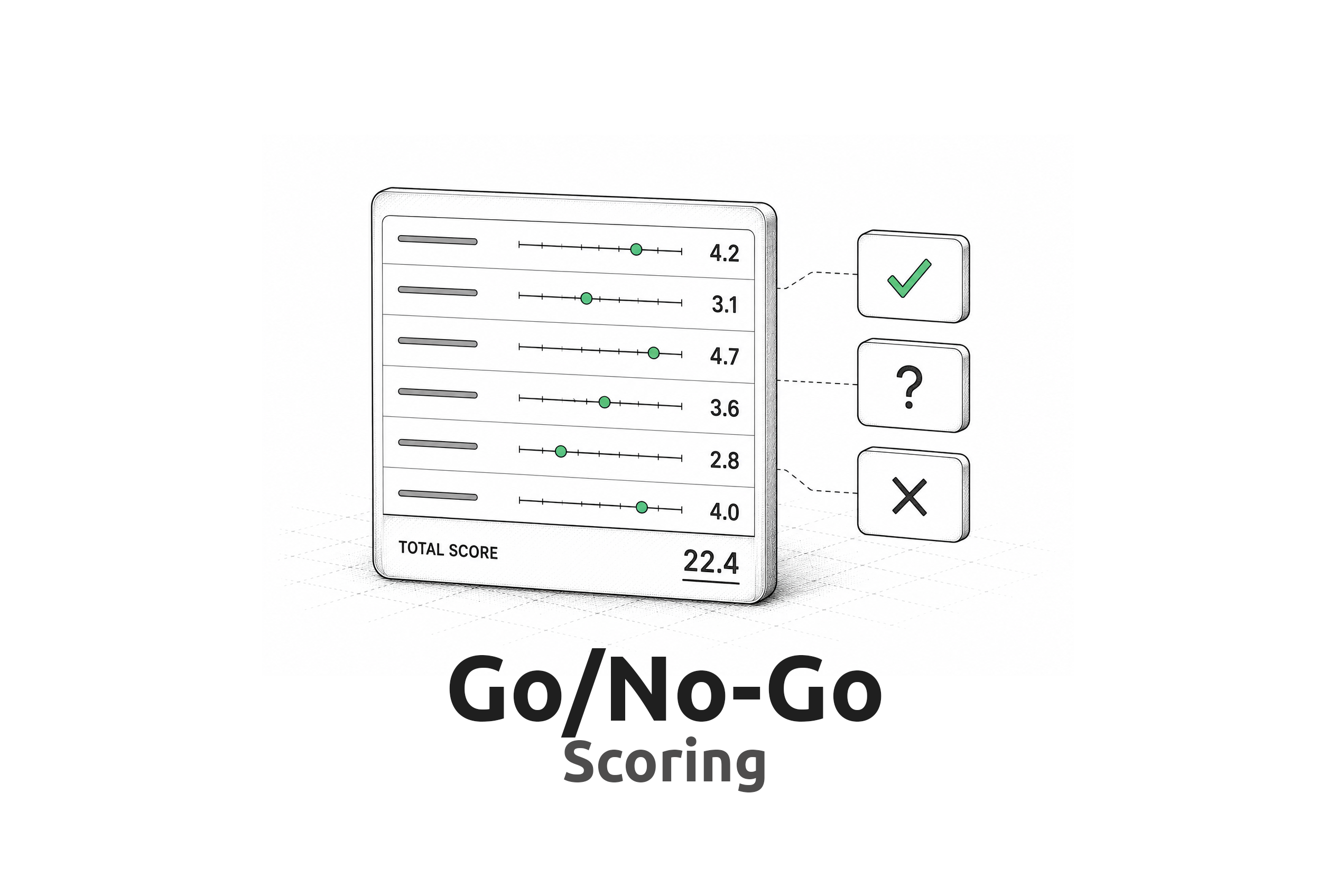
Go/No-Go Scoring forces the decision into the open. Each opportunity is scored against weighted criteria: existing relationship with the buyer, capability fit, past performance evidence, price competitiveness, incumbent advantage, strategic value, and capacity to deliver. Each criterion is weighted by your team. The score is a number that argues for itself. Pursue. Pursue with conditions. Decline.
Column fodder detection is built in. If the indicators suggest the tender exists to satisfy a procurement requirement for competitive bidders while the outcome is already shaped, that signal is surfaced before the team commits.
The conversation it enables is more important than the score. A bid declined on Go/No-Go evidence is a defensible commercial decision. A bid pursued through Go/No-Go is one the team can commit to without reservation. Either outcome is better than the default.