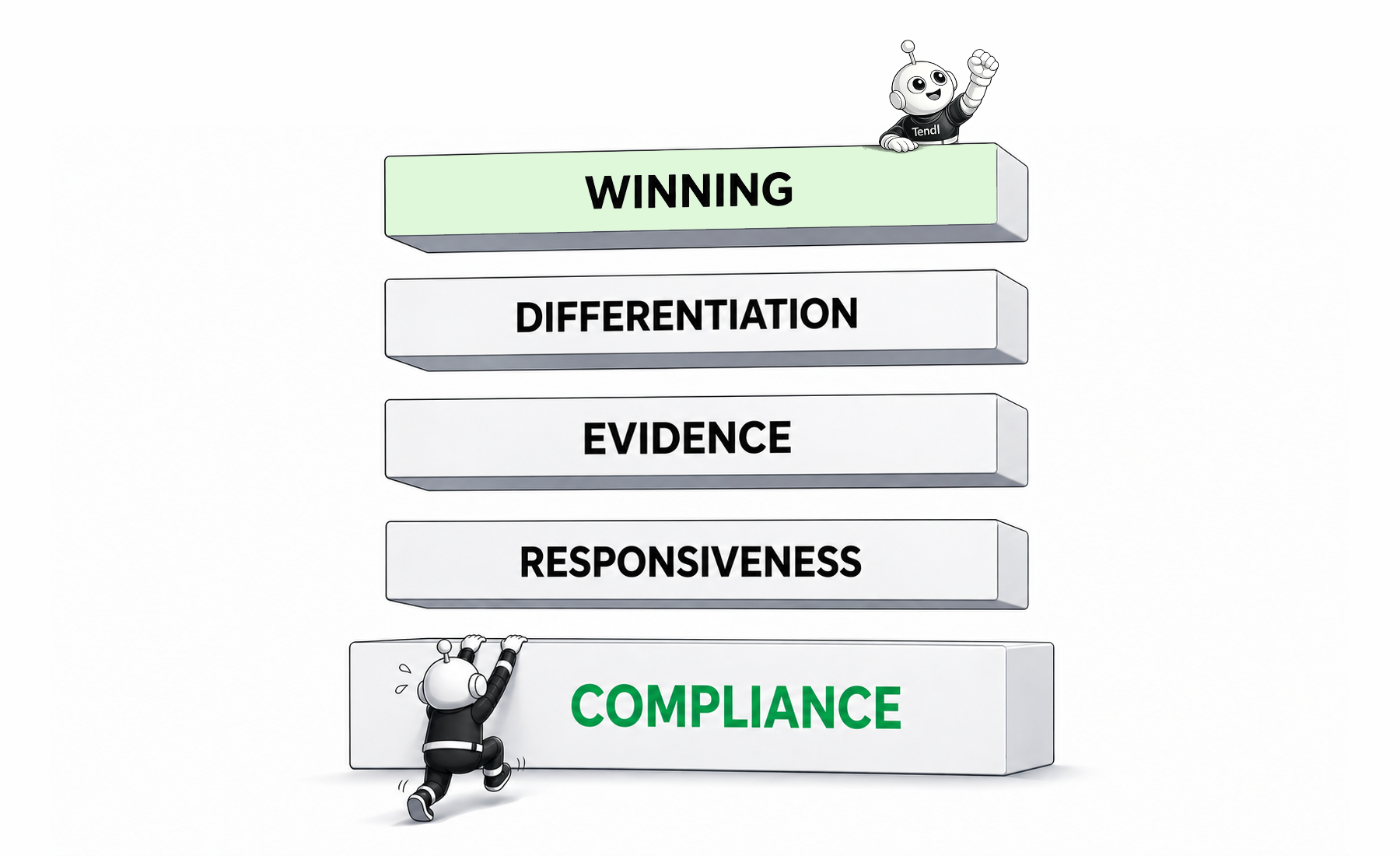
Compliance is the floor. The work that wins tenders sits above it.
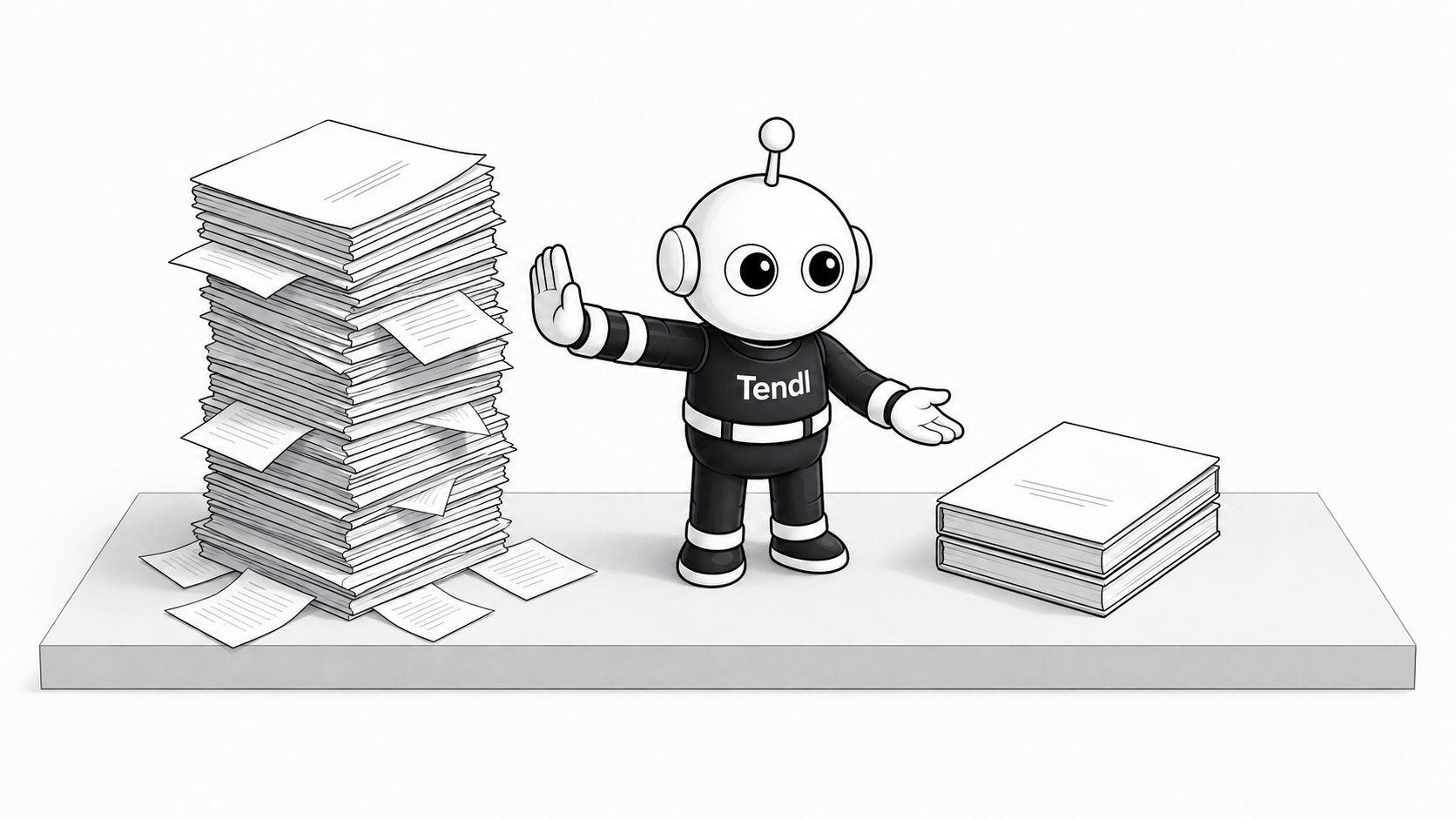
Tender losses get blamed on price, on writing quality, on the ten-day turnaround that should have been twenty. The actual cause is usually something far more banal. The bid was compliant, but compliance was as far as it got.
The reality is more than half of compliant bids lose. The teams that produced them did the work: Every box on the compliance matrix was ticked, every mandatory document was returned, every deadline was hit, and they still went home empty-handed.
However, compliance is the floor every bid has to clear to be considered. The work that wins tenders sits above it, and almost all of it happens before anyone starts to write.
What evaluators reward above the compliance gate
Above compliance, evaluators are scoring for two things compliance does nothing for:
- Responsiveness is whether the supplier reads the buyer correctly, addressing the concern beneath the wording of the question.
- Differentiation is whether the supplier gives the evaluator a defensible reason to score this response higher than the next compliant one.
The APMP Body of Knowledge puts the underlying distinction directly: proposals can be compliant without being responsive, and the proposals with the highest win probability are both (APMP, Compliance Matrix). And as we set out in Evaluators Are Not Looking for the Best Bid. They Are Looking for the Safest One, evaluators reward both layers because both reduce the perceived risk of selecting the supplier.
Why responsiveness and differentiation depend on retrievable proof
Responsiveness without proof is opinion. Differentiation without proof is marketing.
The work that actually scores requires evidence retrievable in a form the criterion can verify: case studies, named projects, measurable outcomes, validated delivery data. That evidence has to exist in the organisation in a governed form, indexed against the criteria the next tender will bring and ready to extrapolate against requirements the team has not yet seen.
That is the real work above compliance. It is also the work most organisations have built no infrastructure to support.
The cognitive load of doing this thinking by hand
For a bid team without that infrastructure, the cognitive load is enormous. Every tender begins with reading the questions twice to work out what the buyer is really asking, then calibrating each answer to address both the surface question and the underlying concern. Each claim has to be backed by a case study someone half-remembers, hunted through inboxes, validated as still defensible, and reformatted for the criterion. The differentiators that actually score depend on whether the person who wrote the last winning response is still in the building to surface them.
By the deadline, the team has been thinking under pressure for two weeks, the senior commercial people have been pulled into work that should never have reached them, and the bid that lands on the evaluator’s desk has been compiled rather than designed. Every new tender starts the same loop, and most bid teams have come to treat that as the cost of being in the market.
It is not the cost of being in the market. It is the cost of carrying that thinking by hand.
How Tendl absorbs the structural thinking
This is what Tendl is built for. The structural thinking moves into the system. When a new tender lands, the buyer’s language and intent is already mapped to historical answers that addressed the same concern, the evidence the criterion needs is already retrieved and validated, and the differentiators that scored well in previous evaluations are already surfaced and ready.
What gets handed back to the team is the work only people can do: strategic shaping, commercial calibration, the conversations that decide which pursuit deserves the attention. Imagine opening a new tender to find the responsiveness already mapped, the differentiators already surfaced, and the proof already retrieved against every criterion that mattered. A few keystrokes in, the structural carry is gone, and the only thing left for the team is the judgement layer at the top, where wins are actually decided.
The bid function stops behaving like a heroic effort. It starts producing wins on a cadence that capacity and adrenaline could never sustain.
Why compliance discipline alone does not win contracts
Compliance discipline keeps an organisation in the room. It has not, on its own, ever won a contract.
Treating the floor as the ceiling is one of the most consistent reasons capable organisations lose work they were qualified to win. The infrastructure that prevents it does the thinking the team has been carrying by hand, so when the next tender lands, the people running the bid function are spending their time on the layer that actually decides the score.