Stop Starting From Blank Pages
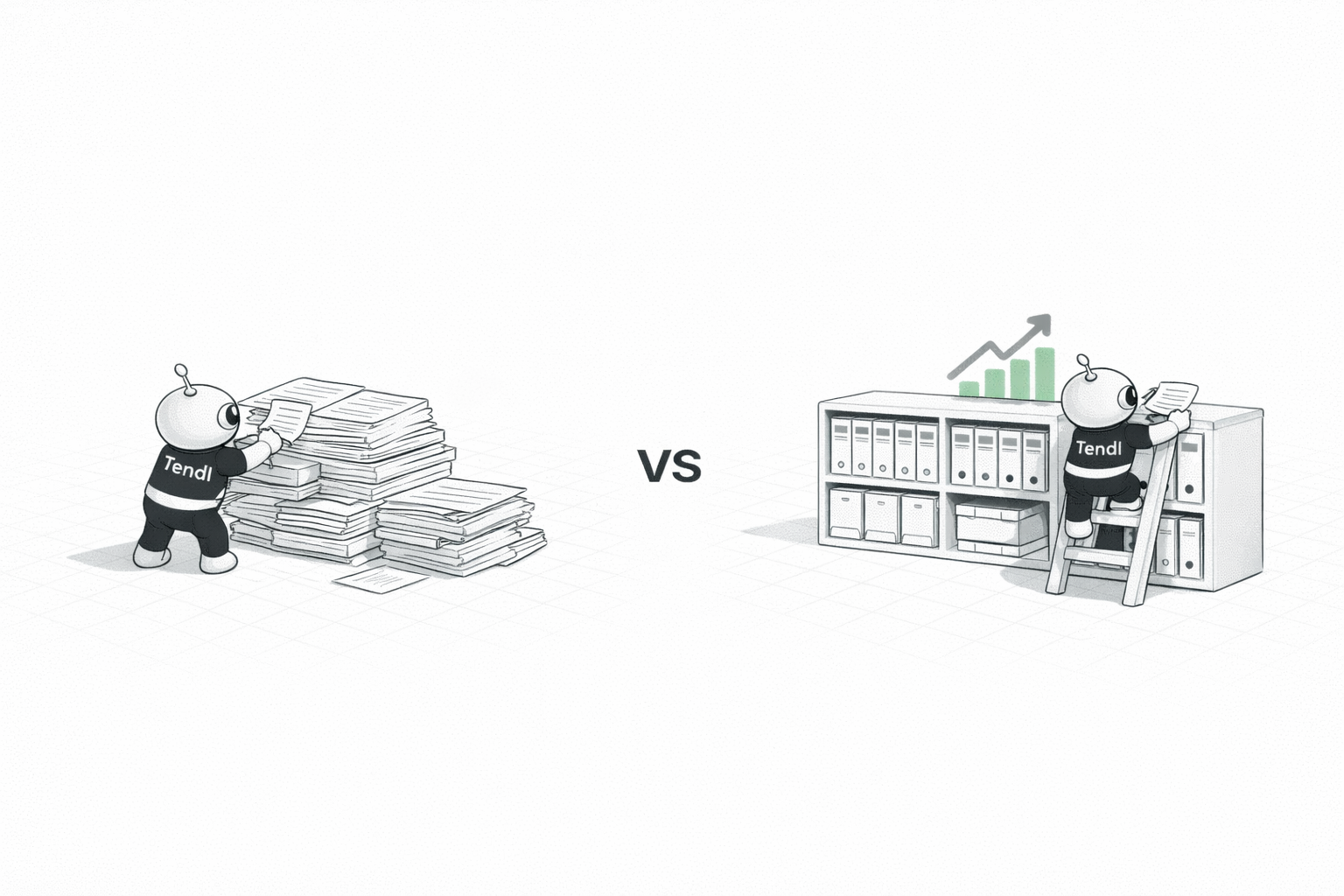
Most bid teams do not have a writing problem. They have a memory problem.
Every time a new RFP lands, the ritual begins:
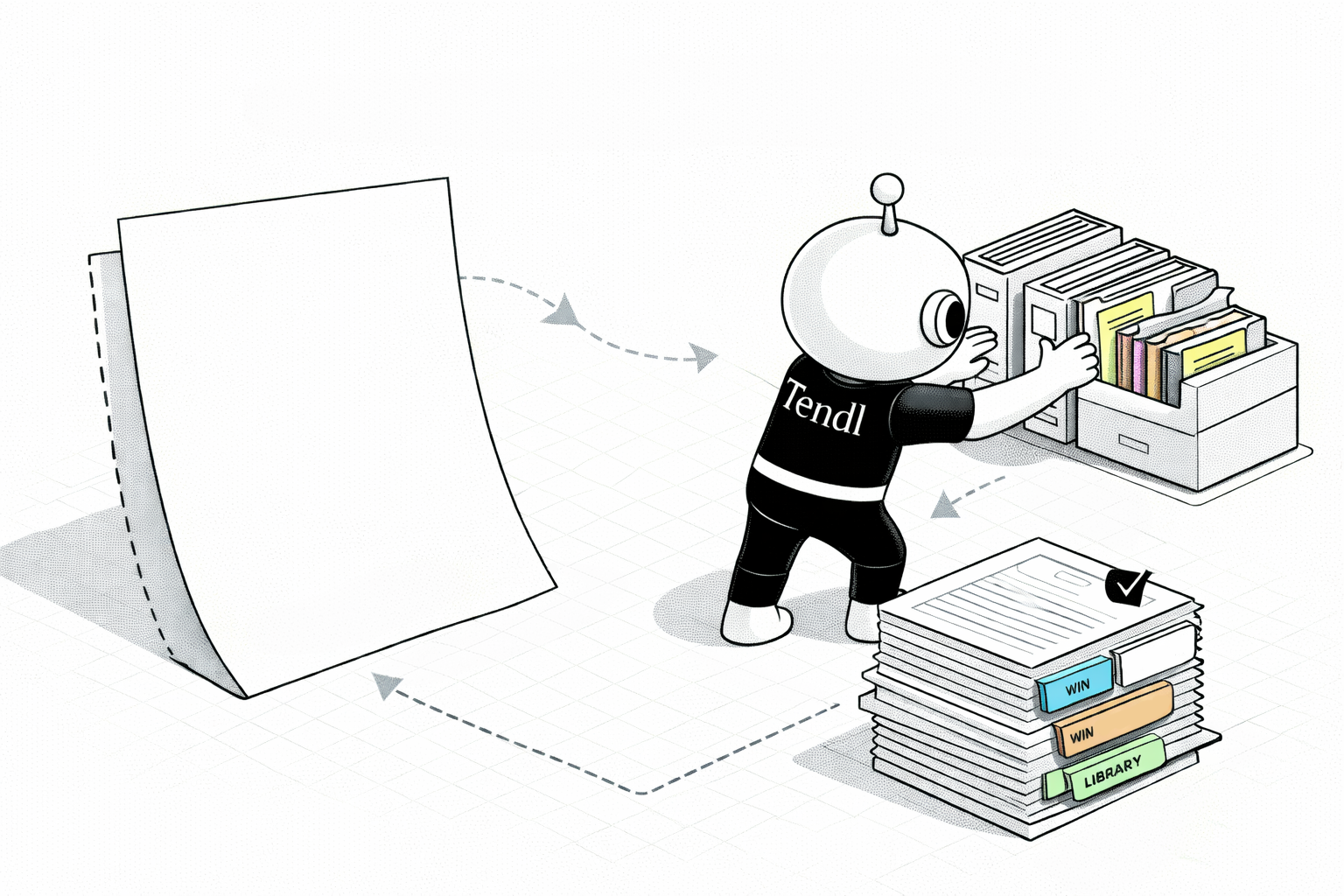
New folder. New Word document. Blank cursor blinking like this is the first time you have ever answered this question.
It is not. You have answered versions of it dozens of times.
The real issue in tendering is retrieval, not effort.
If your team cannot instantly access:
- The highest scoring answer you have ever written on that topic
- The case study that actually won last time
- The exact phrasing that satisfied a similar evaluator
Then you are not building capability, you are rebuilding it every time from scratch.
That’s compounded advantage leaking out of your organisation every single time you click “New Document”.
Why win rates plateau even when teams work harder
This is why win rates plateau. Not because your writers lack talent. Not because AI is not good enough. Because nothing compounds.
In sales, repetition builds advantage. It’s the cornerstone of revenue building.
The second quarter is stronger than the first because the system remembers what happened based on measurable outcomes and reliable recall.
Tendering without institutional memory resets performance to zero.
Tendering rarely works like that. Rather than building on what came before, it circles back to the beginning. Evidence is reformatted, capability is re-explained, and hard-won context is reconstructed as if it were new.
The team is busy but the organisation is not advancing.
Your compliance logic should not live inside one person’s head.
Your team’s strongest case study should move from being a buried PDF to a governed asset that is recalled every time it’s relevant. When it does, each submission becomes stronger than the last, and your win probability increases without increasing effort.
The difference between document storage and true institutional memory
There is a difference between storing documents and building memory. Storage preserves files where memory increases probability.
A governed system holds context, performance, and proof together. It surfaces the answer that actually scored well. It recalls the case study that shifted evaluator confidence and carries forward the certification that mitigated risk last time. When material is brought back into play, it arrives verified, structured, and ready.
The real strength is in requirements being captured once and never lost. Evidence is refined and strong arguments return stronger because they are built on lived results.
Over time, the library becomes sharper with every use. Responses assemble in seconds, grounded in reality, aligned to evaluator concerns, and positioned to win before new words are added.
If each submission does not strengthen the next, the system is not compounding. It is repeating
How to know if you have a real memory system
Archives store the past.
Infrastructure compounds it.
If you cannot retrieve your best answer in under 30 seconds, you do not have a memory system, you have a filing cabinet.
Stop starting from blank pages. Start from your best work.