In most organisations, tendering is treated as an administrative task. Someone monitors the portals, someone formats the documents to the schedule, and the deadline is met, usually late in the evening. The work is real, and it is almost entirely reactive.
Tender management is the discipline that puts judgement back into that work. An organisation decides which opportunities to pursue, answers them from evidence it already holds, and tracks the resulting pipeline as it would any other source of revenue. Done consistently, it turns an unpredictable stream of work into something the business can plan around and revenue it can predict.
What is tender management?
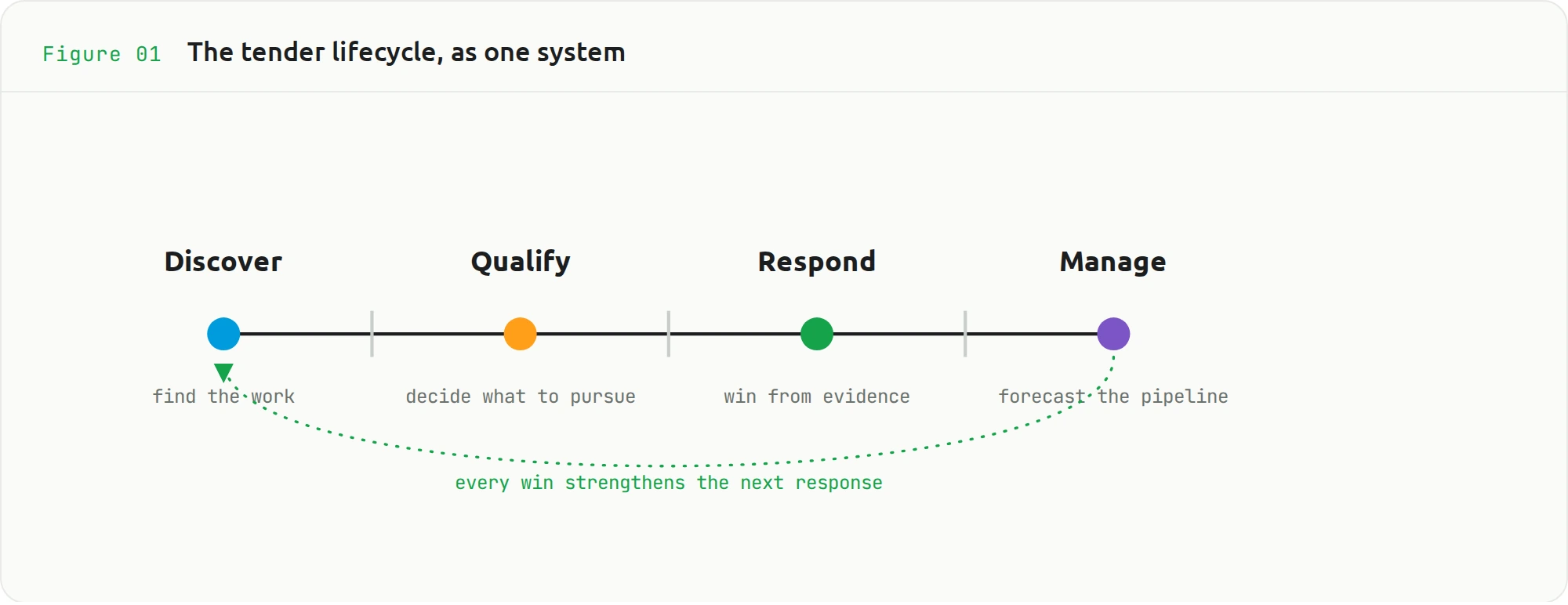
Tender management is the discipline of winning work through tenders, RFPs, and ITTs, from the first alert to the awarded contract. It covers four connected stages:
- Discover. Surface the opportunities worth your attention.
- Qualify. Decide what to pursue and what to decline.
- Respond. Draft from proven, approved evidence.
- Manage. Forecast the pipeline as weighted revenue.
When these stages sit in separate tools and inboxes, work slips through the gaps between them. Running them as one connected process changes that. Each stage informs the next, so a qualification decision shapes the forecast and an approved response feeds the one that follows.
Why companies lose winnable tenders
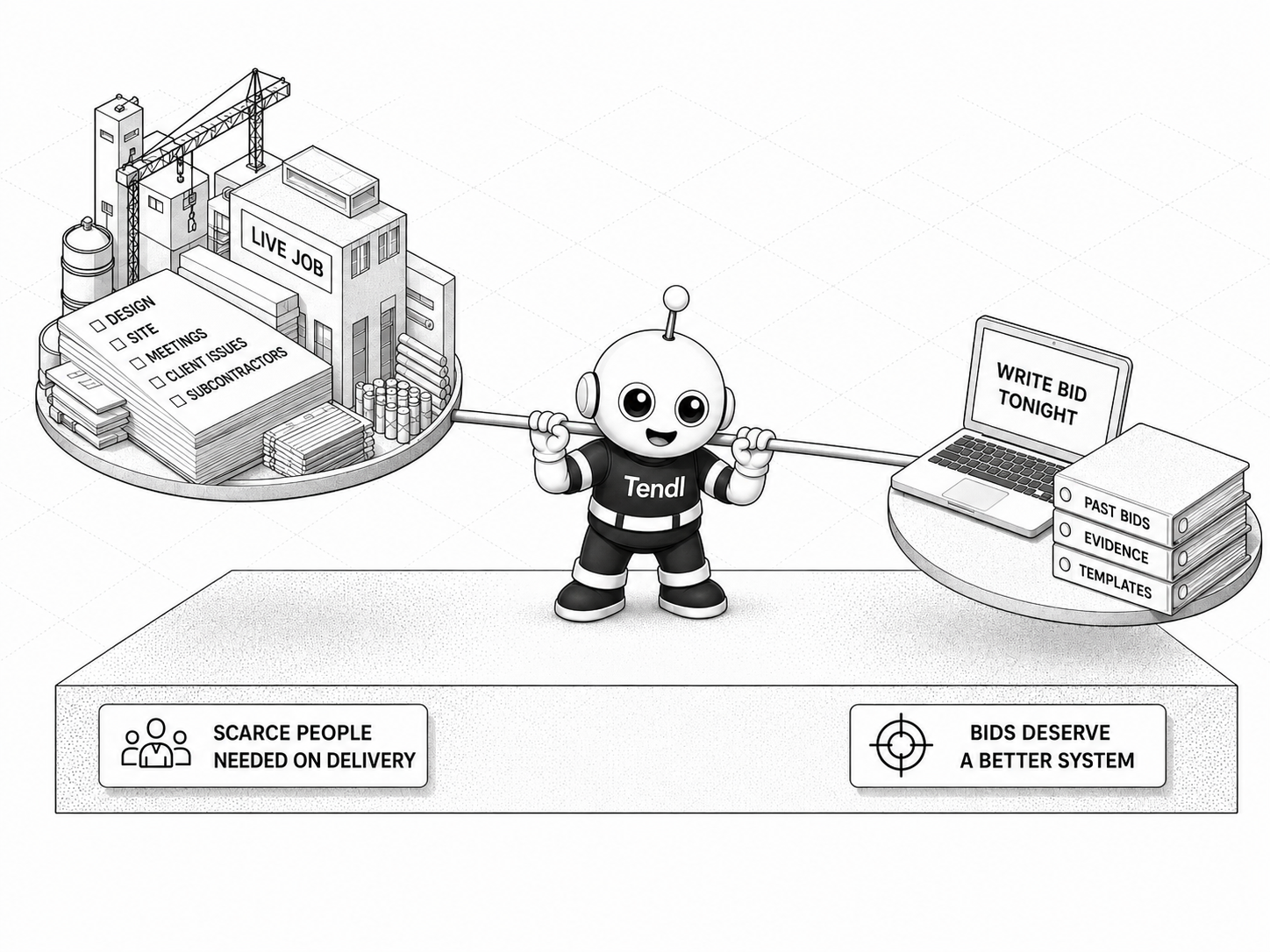
Most tenders are lost before anyone starts writing, in the decision about what to pursue. When tendering has no clear owner and no qualification step, the team tends to respond to whatever comes in. Effort is spread across too many opportunities, and the ones worth winning are resourced no better than the long shots.
The consequences are the ones a commercial leader already measures:
- Win rate stays low, because winnable bids are under-resourced.
- Cost per bid rises, because each response is built from scratch.
- Little improves over time, because nothing from one bid carries into the next.
Where a team spends its bid hours matters more than how many hours it spends.
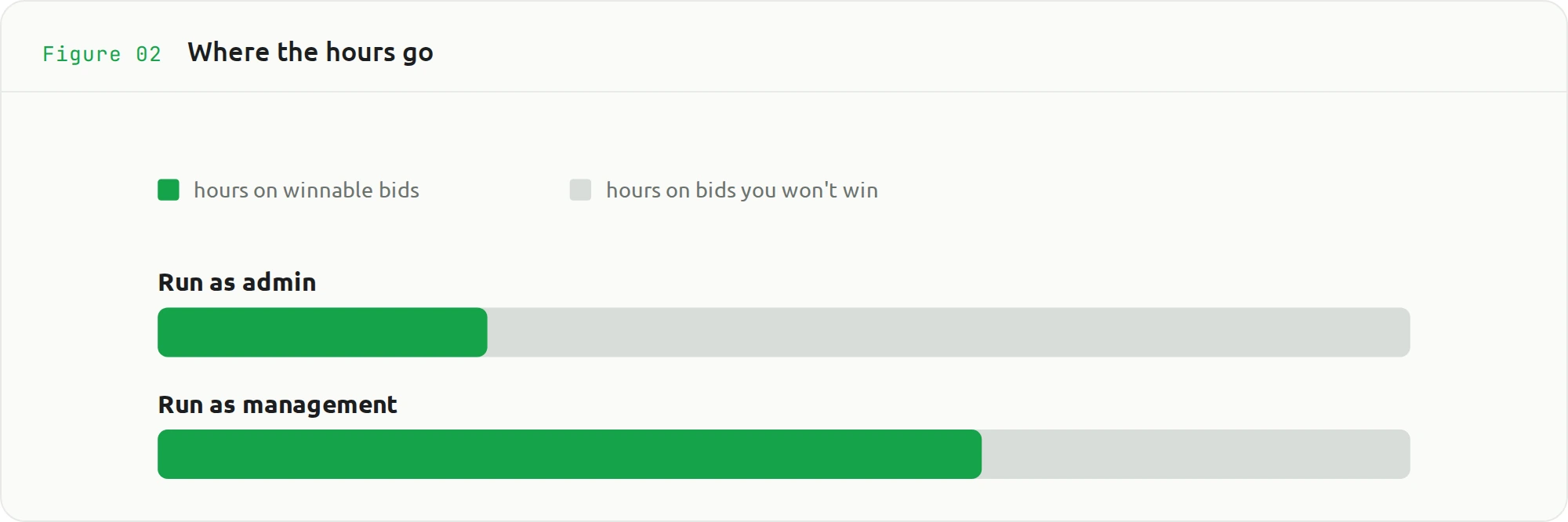
The highest-return decision in tendering happens before anyone writes a word.
How to decide which tenders to pursue
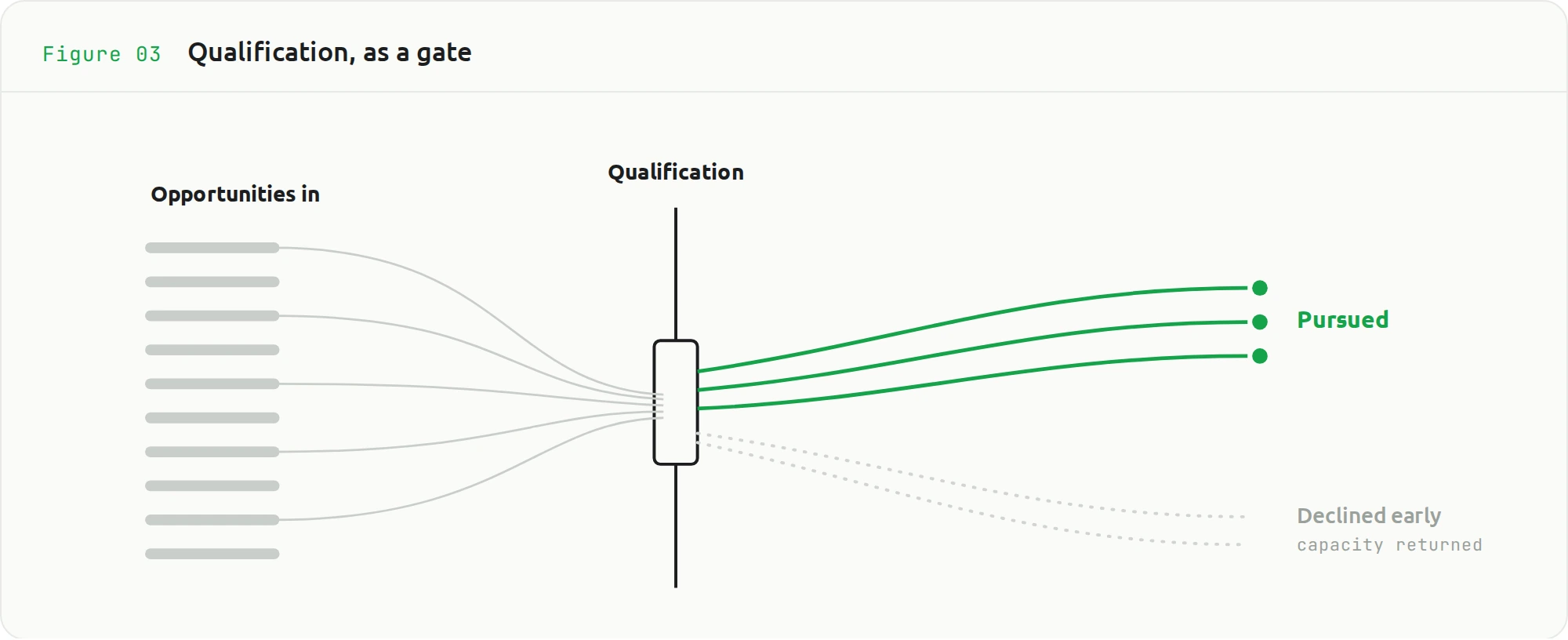
Qualification is the highest-leverage decision in the process. A response cannot recover a bid the organisation was never positioned to win, so the choice to pursue or decline matters more than the quality of any single answer.
A disciplined bid or no-bid decision does two things. It keeps the win rate honest by holding the team to work it can realistically win, and it returns time to the responses that warrant it. The hours freed by declining early are the hours that raise the quality of the bids worth winning. Teams building this discipline can score an opportunity in minutes with the Go/No-Go Scorecard.
How a bid library raises your win rate
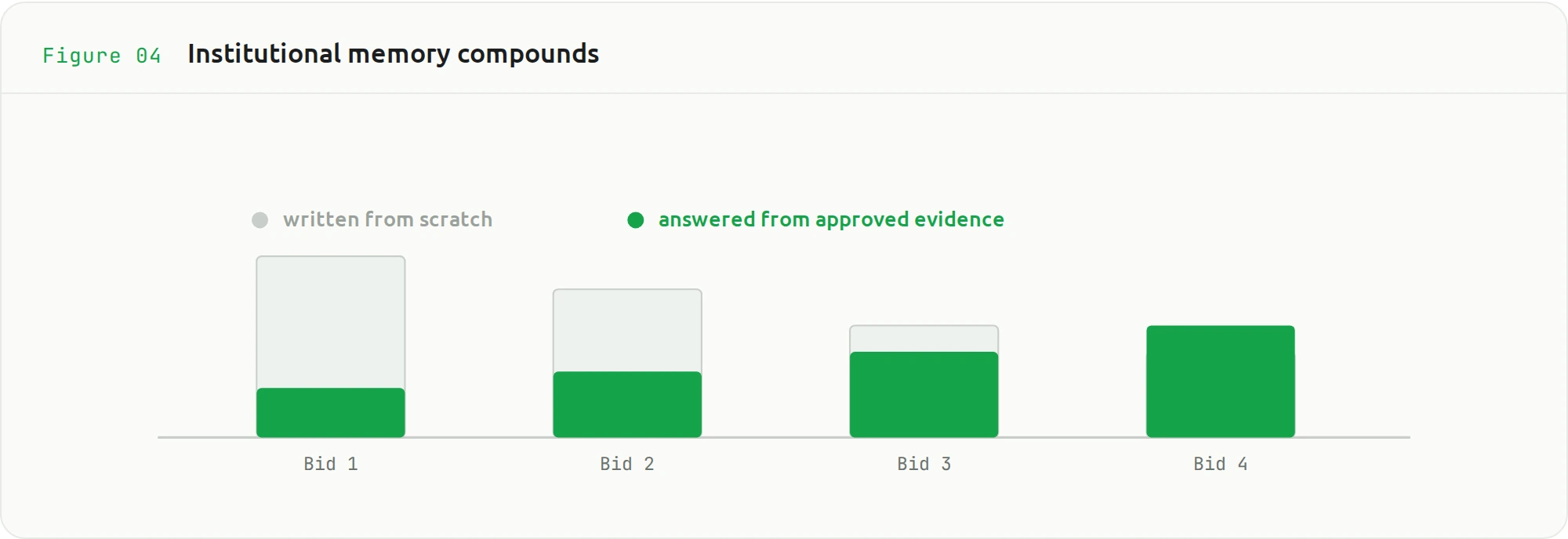
Tender management improves with volume, because the material accumulates. Approved answers, cleared case studies, and recorded wins and losses all become assets the next response can draw on. A team working from a governed library of its best material begins each bid from a stronger position than the last. Over a year, this changes the experience of the work itself. The Monday tender lands, and much of the difficult thinking is already done.
What to look for in tender management software
Tender management software is worth its cost when it runs the entire lifecycle in one governed system. Automating a single stage in isolation tends to move the bottleneck rather than remove it.
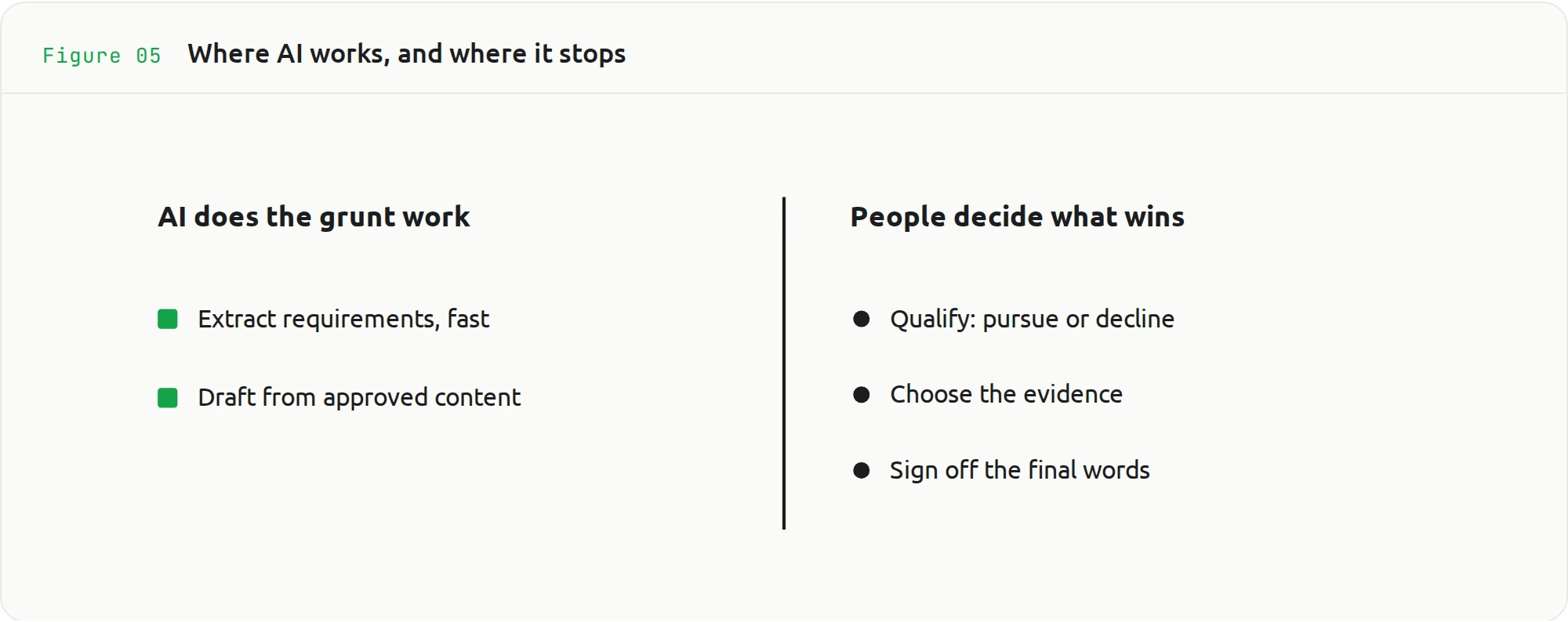
This is also where the role of AI becomes clear. Inside a governed system, AI handles the mechanical work well. It reads a long document and extracts the requirements in minutes, and it drafts from your approved content so the language reflects your own projects. The decisions that determine whether you win stay with your team: which opportunities to qualify, which evidence to use, and how the final response reads. Tendl is built around that division. The system provides the structure and does the groundwork, and a person reviews and approves everything before it is submitted.
When you assess a platform, four questions are usually enough to separate the serious options:
- Does it run the whole lifecycle, or only one part of it?
- Does the AI draft from your evidence, or from the open web?
- Can leadership read the pipeline as a weighted forecast?
- Is every response auditable by default?
Run tender management as a sales channel
Tender management earns the name once tendering is treated as the sales process it is. The pipeline is visible, qualification is deliberate, and the evidence built on one bid carries into the next. A channel that often accounts for a significant share of revenue finally operates with the same infrastructure that sales, finance, and operations have relied on for years.