Most tendering software still charges the way enterprise software charged in 2015.
- Annual licence.
- Per-seat pricing.
- A large upfront commitment before a single tender has been touched.
That model made sense when the vendor’s cost base was fixed. Hosting, support, and feature development cost roughly the same whether your team used the platform every day or once a quarter.
But the cost structure underneath tendering software has changed. The pricing hasn’t caught up.
Variable Costs, Fixed Prices
The default assumption across the bid software market is that tendering platforms should charge licence fees. It hasn’t been questioned becuase that’s how traditional software as a service (SaaS) has worked.
Like many things, AI has shifted The economics underneath the product. When a platform uses large language models to assist with drafting, extraction, summarisation, or compliance mapping, the cost to the vendor scales directly with how much the customer uses the system. More tokens processed, more compute consumed, more cost incurred.
This is a variable cost model sitting inside a fixed price wrapper. That mismatch creates problems for both sides.
How AI Infrastructure Actually Costs
Traditional SaaS has low marginal cost per additional user. That is why per-seat licences work. AI-assisted platforms work differently. Every document processed and every requirement extracted consumes compute with a real unit cost.
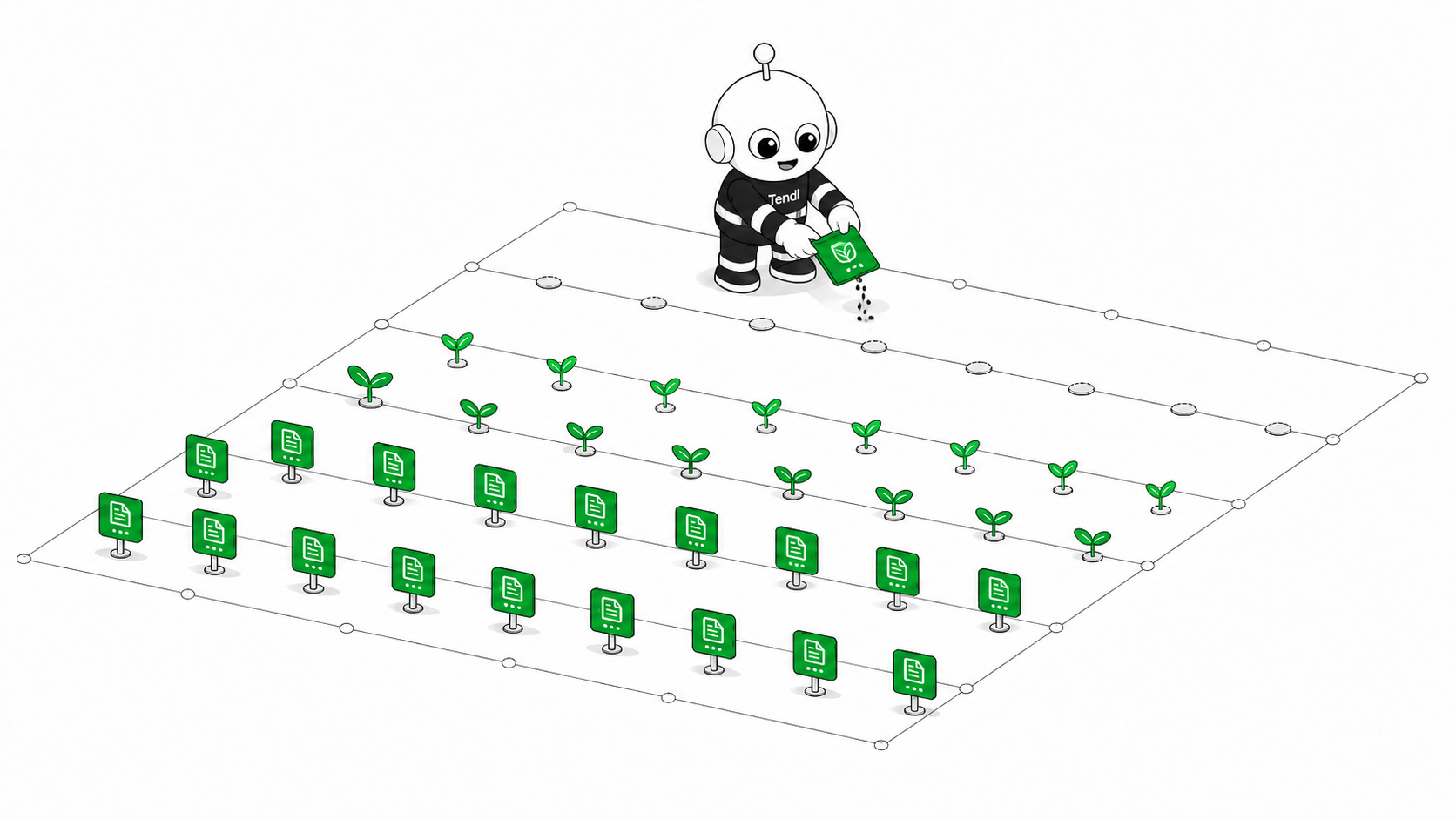
The natural pricing model for this kind of infrastructure is throughput. You pay for what you use. The platform earns when it works. When it sits idle, nobody pays for idle capacity.
Licences Punish The Disciplined
Tendering is inherently cyclical. Government procurement calendars cluster around financial year boundaries. Major programmes release in waves. Some quarters produce ten active bids. Others produce two.
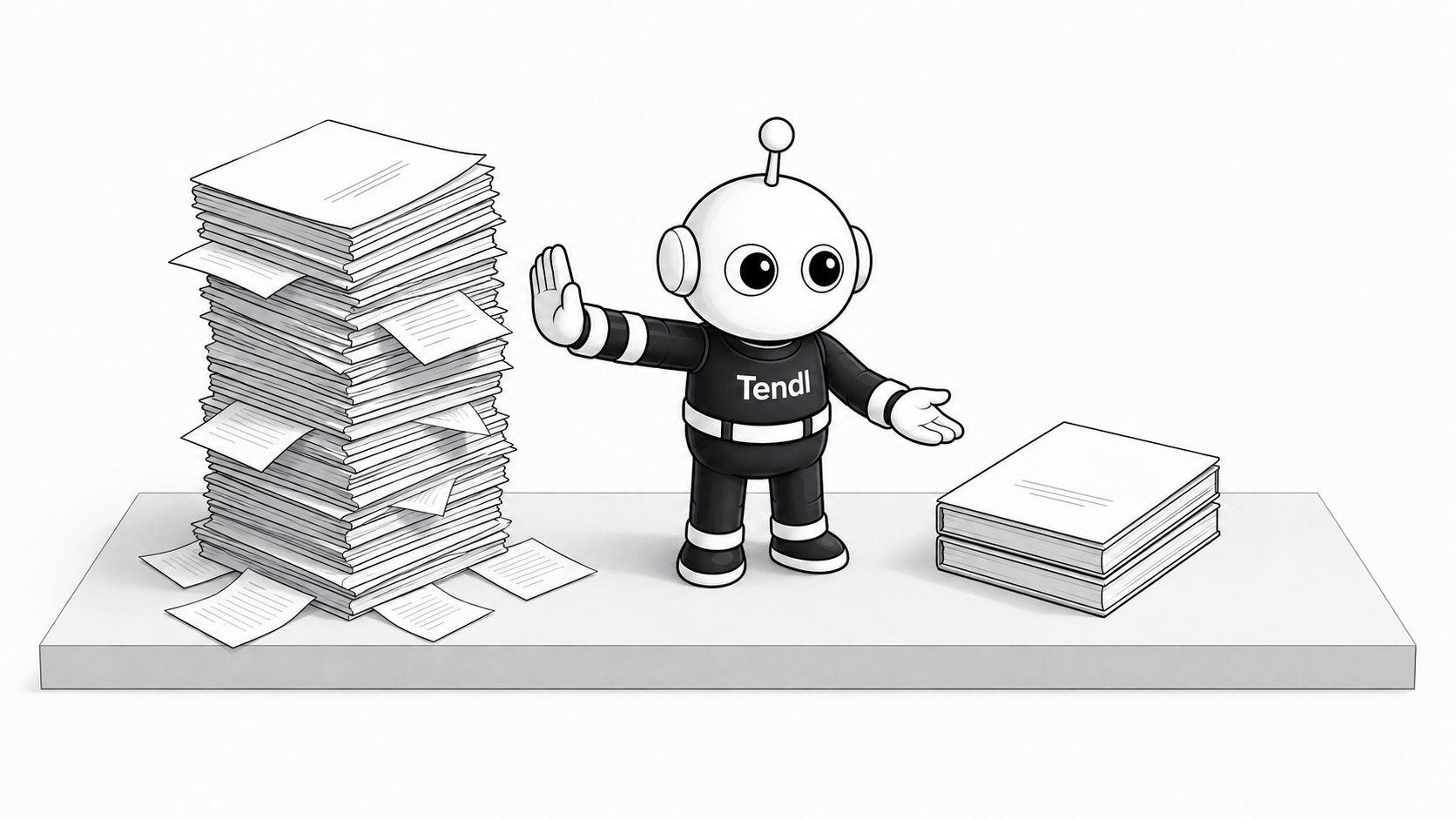
A fixed licence charges the same in a month with five complex submissions as it does in a month with none. Organisations that are disciplined about qualification, that say no to weak opportunities and focus on winnable work, pay the same as organisations that bid on everything. The software penalises exactly the behaviour that produces better commercial outcomes.
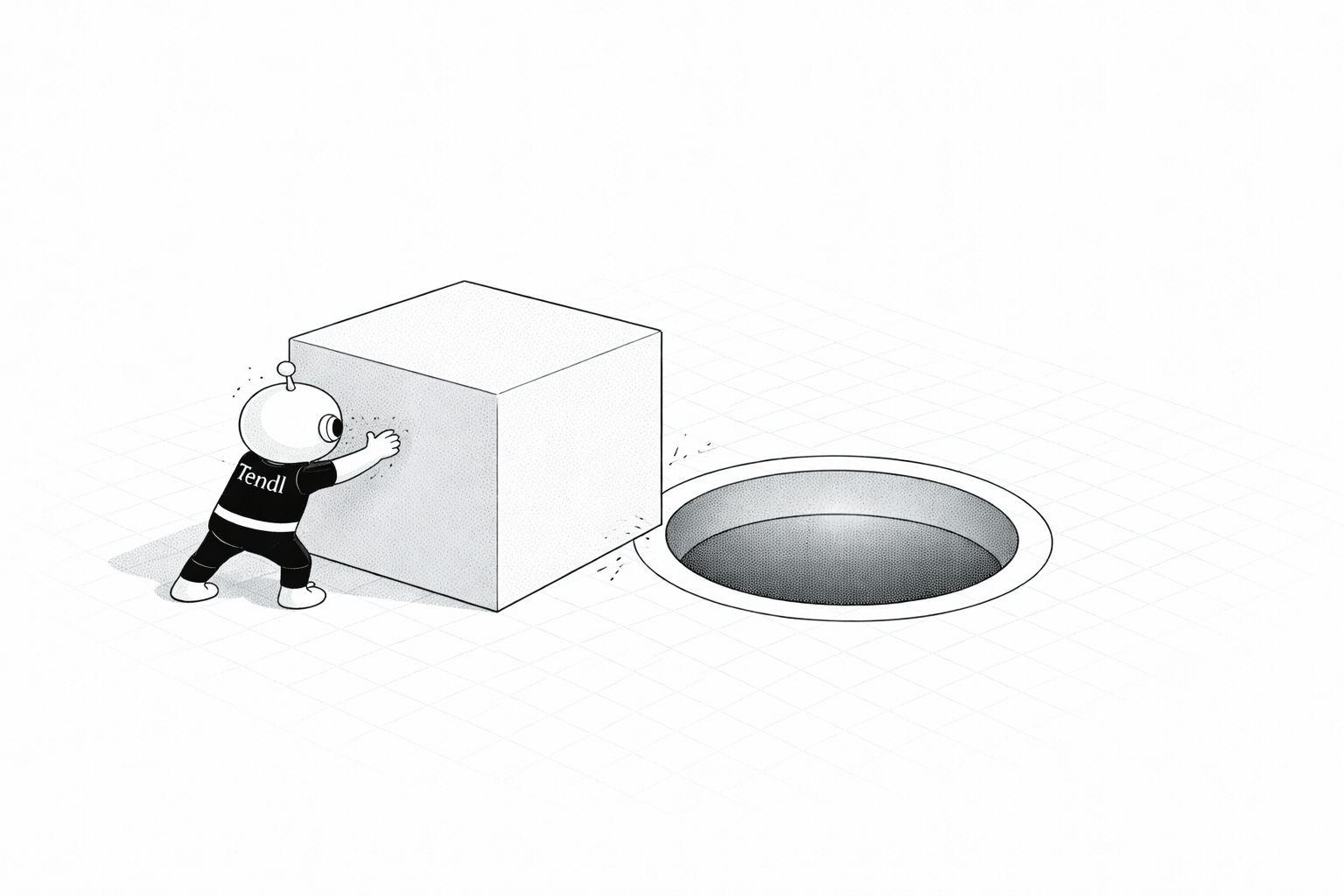
For firms entering the government market for the first time, the problem is sharper still. A five-figure annual commitment is a serious barrier when tender volume is still building.
Three Questions For Your Next Vendor Evaluation
If you are evaluating tendering software, look past feature lists and ask about pricing structure. Does the vendor’s pricing reflect the cost of the AI infrastructure they are selling? What happens to your annual spend if tender volume drops 40% in a slow quarter? Does the platform charge you for months when it delivers no measurable value?
The answers will tell you whether the vendor has built pricing around your reality or around their own revenue predictability.
Where Tendl Stands
Tendl removed platform fees entirely. Customers pay on throughput: the volume of tendering activity that flows through the system.
When the platform works, it earns. When it is idle, it costs nothing.
That decision followed directly from how AI infrastructure costs actually work, and from the recognition that tendering activity is too variable for a fixed annual commitment. Laurie Nichol, Tendl’s founder, has written about the reasoning in detail at tendl.ai/new/from-the-founder/no-more-platform-fees.