
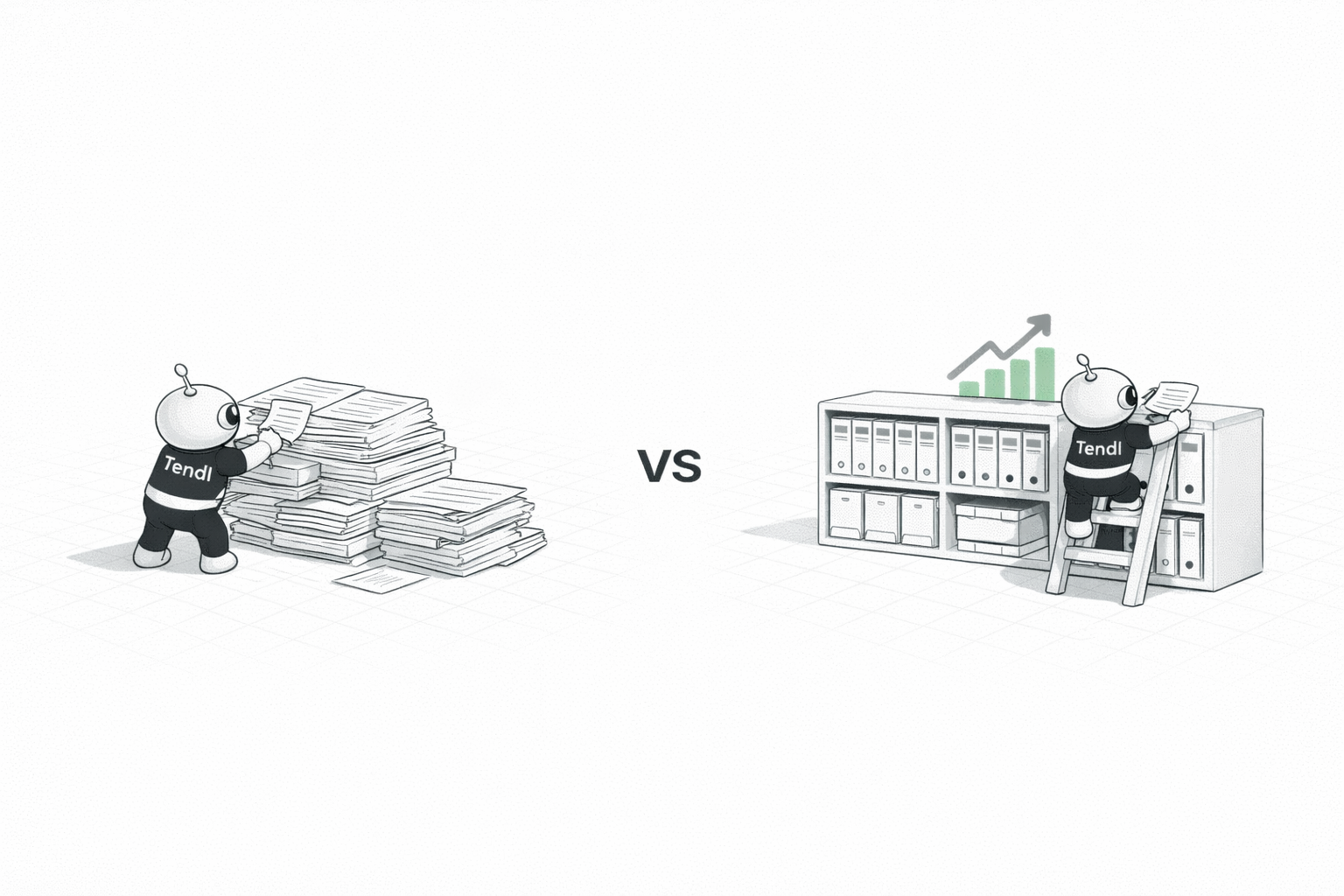
The difference between reuse and compounding
Most bid teams reuse content. Very few compound it.
The distinction matters more than it appears. Reuse is a time-saving tactic. Compounding is a structural advantage that improves win probability over time. One makes your team faster. The other makes your organisation better.
The tendering industry treats them as the same thing. They are fundamentally different.
What Reuse Actually Looks Like
Reuse typically means someone on the team remembers that a similar question was answered six months ago. They find the old response, copy the relevant section, adjust the client name and a few details, and paste it into the new submission.
This is efficient compared to writing from scratch. It saves hours. It reduces the immediate pressure on the bid team. And it is how most organisations operate.
The problem is that the content being reused is frozen at the point it was written. It reflects the evidence available at that time, the delivery track record known at that time, and the strategic messaging relevant at that time.
Six months later, the organisation may have completed three more projects, updated a methodology, won an award, or restructured a service line. The reused content carries none of that. It is a snapshot of a previous moment, dropped into a present context.
Reuse saves time. It does not improve the quality of what gets submitted.
The Decay Problem
Content that gets copied and pasted across bids degrades quietly:
Small inaccuracies compound. Statistics go stale. Case studies reference contracts that ended two years ago. Capability statements describe teams that no longer exist in that form.
Because the content looks polished and reads well, nobody reviews it critically. It passed scrutiny once, so the assumption is that it still holds. This is how organisations end up submitting responses built on outdated evidence, without anyone noticing until a debrief reveals that the evaluator found the response generic or unconvincing.
Ask any bid manager about the most common copy-paste failure, and the answer is almost always the same: the wrong client name left in the document.
A team copies a previous response, updates the obvious fields, and misses the one reference to the wrong buyer buried on page 47. Multiple bid consultancies, including Bidsmith, list this as one of the most frequent causes of downgraded or disqualified tenders. It is the most visible symptom of a deeper problem: the content was never governed, just duplicated.
The most dangerous feature of copy-paste reuse is that it creates an illusion of quality. The document looks professional and the language is clean. But the underlying evidence has drifted from reality, and the response no longer reflects what the organisation can actually demonstrate today.
What Compounding Looks Like
Compounding is different in structure, not just intent.
In a compounding system, content is not stored as finished responses. It is stored as governed assets: evidence statements, capability descriptions, case studies, methodology explanations, and compliance positions. Each asset is tagged, version-controlled, and linked to the projects, sectors, or capabilities it supports.
When a new bid arrives, the team does not search for a previous response to copy. They assemble a response from current, governed components. The case study pulled into a submission this month reflects the project that was completed last month, because the library was updated when the project closed out.
This is the structural difference. Reuse pulls from the past and hopes it still works. Compounding pulls from a living system that reflects the present.
Over time, the gap between these two approaches widens. An organisation that reuses content stays roughly the same quality, bid after bid, with slow degradation. An organisation that compounds its knowledge gets measurably stronger. Its evidence base grows. Its compliance positions become more precise. Its win themes become sharper because they build on real, current proof.
Why The Distinction Matters Commercially
Evaluators score evidence. They look for specificity, relevance, and recency. A response that references a completed project from the last twelve months scores higher than one referencing a project from three years ago. A capability statement that names current certifications scores higher than one that lists expired accreditations.
Compounding directly affects these scores because the knowledge base stays current.
This is where the commercial impact becomes visible. Win rates improve incrementally, bid after bid, because the quality of the evidence improves incrementally. The team is not writing faster. They are submitting stronger responses, assembled from assets that reflect genuine, current organisational capability.
For a sales-focused team, this means pipeline conversion improves without adding headcount. For a bid writer, it means less time fixing outdated content and more time on strategic assembly. For oversight, it means the evidence trail is traceable, governed, and defensible.
What Prevents Compounding
Most organisations understand the concept. However, few implement it. The reasons are usually structural.
Compounding requires someone to own the knowledge base. It requires a process for updating assets when projects complete, methodologies change, or accreditations renew. It requires tagging and categorisation that makes retrieval practical. It requires governance rules that prevent outdated content from being used.
In most organisations, none of this infrastructure exists. The bid team works from a shared drive. Content lives in folders organised by tender name, not by capability or evidence type. Finding relevant material means remembering which bid contained a good answer and knowing where it is stored. According to McKinsey Global Institute research, employees spend an average of 1.8 hours every day, 9.3 hours per week, just searching for and gathering information (McKinsey, “The Social Economy”). In a bid team operating from a shared drive, that number is almost certainly higher.
This is why copy-paste persists. The infrastructure for compounding is absent, so reuse becomes the default. Teams are not lazy. They are working inside a system that offers no better option.
The Compounding Threshold
There is a point at which an organisation’s knowledge base becomes a genuine competitive asset. It takes time to reach, but once it does, every subsequent bid benefits from everything that came before.
Case studies are current and tagged by sector, capability, and contract value. Methodology descriptions reflect live operating procedures. Compliance positions are pre-built and governed. Evidence statements reference verifiable, recent delivery.
At this point, the bid team stops rebuilding and starts assembling. Response quality goes up. Response time goes down. The cost of each bid drops while the conversion rate climbs.
This is what institutional memory looks like when it is treated as infrastructure. It compounds.
The Honest Question
Every organisation that submits tenders regularly should ask one question: is our knowledge base better today than it was twelve months ago?
If the answer is yes, something is compounding. If the answer is no, or unclear, the team is reusing.
And reuse, no matter how efficient, is a flat line. It does not build advantage. It just maintains pace.
The organisations that win consistently over years are not the ones with the best writers. They are the ones whose evidence gets stronger with every bid they submit, every project they deliver, and every lesson they capture.
That is the difference between reuse and compounding.